
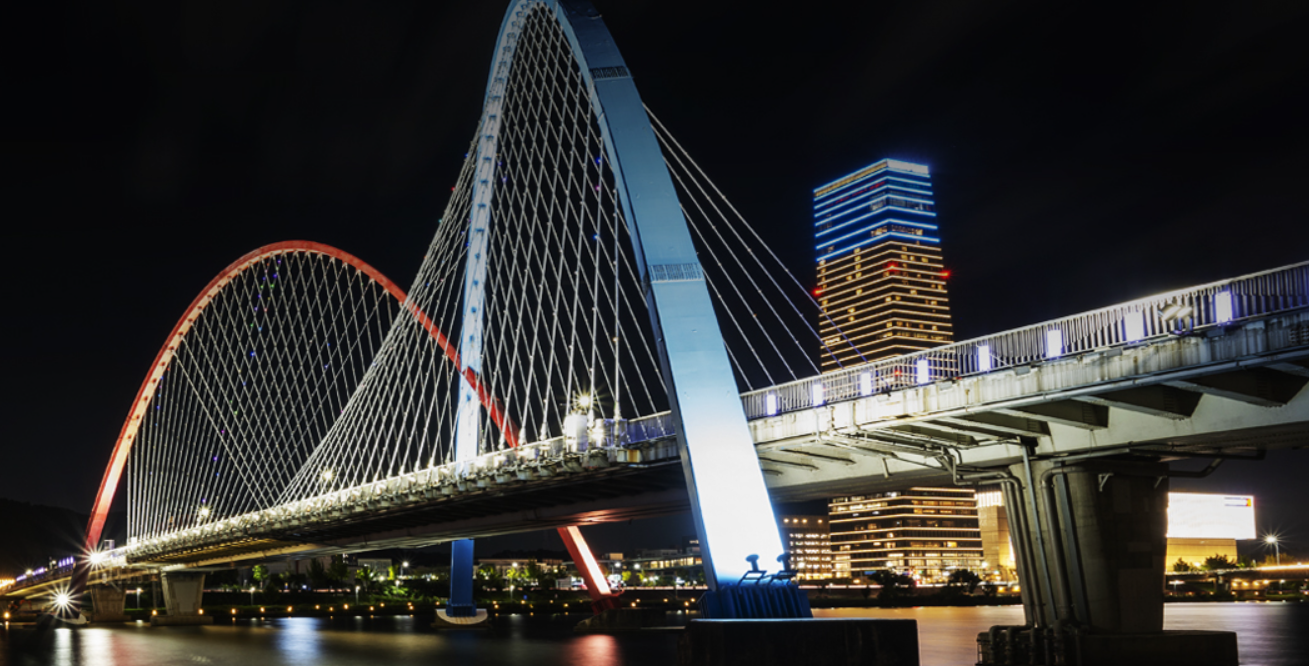
Most visitors to Korea encounter Daejeon (대전) through a train window. It sits almost exactly in the middle of the peninsula — about an hour from Seoul by KTX — and functions as the country’s central transit hub. Trains stop here. People change lines. And then they leave.
That’s a shame, because Daejeon is one of the most liveable, likeable cities in Korea — and one of its most delicious. It’s a proper city of 1.5 million with a buzzing university culture, a respected science district, excellent jokbal (braised pig’s trotters), and a local food identity so strong that people make day trips from Seoul just to eat here.
The bread, above all, brings them in.
The City
Daejeon sits in South Chungcheong Province, cradled by low mountains on multiple sides. The downtown areas of Dunsan and Eunhaengdong are modern and walkable, filled with cafes, restaurants, and department stores. The older Jung-gu district around the central train station retains a grittier, more nostalgic character — this is where the city’s food history is concentrated, and where the queues outside the famous bakery begin before the doors open.
As a science city, Daejeon is home to Daedeok Innopolis (대덕연구개발특구), one of Asia’s largest science and technology clusters, and KAIST (Korea Advanced Institute of Science and Technology), one of the country’s most prestigious universities. This gives the city an intellectual, youthful energy that distinguishes it from smaller regional centres.
It’s not a tourist city in the conventional sense — there are no grand palaces or cable cars — but that’s part of its appeal. Daejeon is a city where Koreans actually live, and visiting it means experiencing a version of Korea that international travellers rarely see.
Why Daejeon Is Famous for Bread
Ask any Korean what Daejeon is known for and the answer comes back instantly: 빵 (ppang, bread). More specifically: 성심당 (Sungsimdang).
Sungsimdang has been baking in Daejeon since 1956, when its founder began selling steamed buns from a small stall near the train station to survive after the Korean War. Over seven decades, it grew into one of the most beloved bakery institutions in the country — not a chain, not a franchise, just one bakery in one city that became genuinely iconic.
What makes Sungsimdang remarkable isn’t scale but loyalty. Daejeon residents have grown up with it. Parents bring children who bring their own children. And in recent years, as social media amplified what locals already knew, the bakery began drawing visitors from across the country — and eventually from abroad.
What to Buy
튀김소보로 (Twigim Soboro / Fried Soboro Bread) — ₩2,000 The bakery’s signature item: a round bread roll coated in a crispy, fried soboro crumble, filled with red bean paste. The contrast between the crunchy shell and the soft, yielding interior is what makes it. Sold by the box, it’s the item most people come for and the first to sell out.
부추빵 (Buchupppang / Chive Cream Bread) — ₩2,500 A more recent addition that’s earned devoted fans of its own: a soft bun with a savoury cream cheese and chive filling. Rich, slightly tangy, and completely addictive.
판타롱 부추빵 (Pantaron Buchupppang) — ₩3,500 The larger, more indulgent version of the chive cream bread — filled more generously and priced accordingly. Worth it.
딸기시루 (Strawberry Siru / Strawberry Rice Cake) — seasonal A seasonal item that generates enormous anticipation each spring: layers of rice cake with fresh strawberries and cream. Sells out so fast that regulars arrive at opening to secure a box.
The Queue
Sungsimdang is not a secret. On weekends — and increasingly on weekdays — there are queues. The main branch near Daejeon Station has a ticketing system for popular items during peak periods. Arrive early, especially if you want the soboro bread or seasonal specials.
There are now two branches in the city: the original Eunhaeng Branch (은행점) near the station, and the Dunsan Branch (둔산점) in the newer commercial district. Both are worth visiting; the original has more atmosphere.
When TV Came to Daejeon
Sungsimdang’s national fame was building steadily through word of mouth, but television accelerated it sharply. The bakery has been featured on multiple major Korean food and travel programmes over the years, each bringing a new wave of visitors.
백종원의 3대 천왕 (Paik’s Three Great Kings), the long-running food programme hosted by celebrity chef and restaurateur Paik Jong-won, visited and gave Sungsimdang national-level exposure, framing it as one of Korea’s essential food institutions. Paik Jong-won is one of the most influential food personalities in Korea — an appearance on his programmes is widely understood to be a significant endorsement.
The bakery has also featured on 생활의 달인 (Masters of Living), which profiles Koreans who have spent decades perfecting a single craft, and various travel programmes positioning Daejeon as a food destination rather than a transit stop.
The effect of this coverage has been substantial. Staff report a notable increase in visitors from Seoul and other cities following each broadcast, and the bakery’s seasonal items now generate social media anticipation before they even launch. Sungsimdang has become a pilgrimage for Korean food culture enthusiasts — the kind of place you travel specifically to visit, not stumble upon.
Beyond the Bakery
Daejeon rewards staying longer than a Sungsimdang queue and a KTX back to Seoul.
Jokbal Alley (족발 골목)
Daejeon has a serious jokbal scene centred around a cluster of restaurants near Jung-gu. Daejeon jokbal (대전 족발) is braised until the skin is soft and gelatinous, the meat pulling cleanly from the bone. Served with thin radish wraps, fermented shrimp paste (saeujeot), and soju, it’s one of the best pairings in Korean food. Several of the restaurants on this strip have been trading for thirty years or more.
Expo Science Park (엑스포과학공원)
Built for the 1993 World’s Fair (Daejeon Expo), this large riverside park has aged into a pleasant green space with a science museum, walking paths, and views of the Gapcheon stream. It’s a good way to spend a couple of hours between meals and has a nostalgic quality that older Koreans find particularly appealing.
Yuseong Hot Springs (유성 온천)
The Yuseong district in western Daejeon sits above natural hot spring water. Several bathhouses (jjimjilbang and traditional bathhouses) still offer hot spring baths, and the area has a slightly retro resort character. A soak after a day of eating is a reasonable use of time.
Ppuri Park (뿌리공원)
A distinctive park dedicated to Korean family ancestry and genealogy — unusual in the world and uniquely Korean. The park features hundreds of sculptural monuments representing different Korean family clans (seong-ssi, 성씨), each designed by the relevant families. It’s genuinely interesting even if you have no Korean ancestry.
Getting There
Daejeon is one of the most accessible cities in Korea from anywhere on the peninsula.
From Seoul: KTX from Seoul Station to Daejeon Station takes approximately 50 minutes. The ITX-Saemaeul takes around 1 hour 40 minutes and is significantly cheaper. Trains run very frequently throughout the day.
From Busan: KTX takes approximately 1 hour. Direct trains run multiple times daily.
From Gyeongju or Daegu: Regional trains and intercity buses connect regularly.
Daejeon Station (대전역) is in the older Jung-gu district close to Sungsimdang’s original branch — convenient for visitors arriving specifically to eat. The newer Dunsan district (where the second Sungsimdang branch is located) is a short taxi or bus ride away.
A Practical Note
Daejeon works extremely well as a day trip from Seoul — the train journey is short enough that you can arrive mid-morning, spend a full day eating and exploring, and be back in Seoul for dinner if you choose. For a more relaxed visit, one or two nights gives you time to explore the different neighbourhoods and eat across multiple meals.
Accommodation in Daejeon is significantly cheaper than Seoul or Busan, with good business hotels near both the station and in Dunsan at very reasonable rates.
Daejeon isn’t trying to be Seoul. It doesn’t have the density of attractions, the nightlife, or the international profile. What it has is a confident, unhurried quality of life — and food that punches well above the city’s tourist profile. The bread alone is worth the train ticket.
Arriving from Seoul? See Korea Travel Essentials for transport booking tips.