Seoul has more museums than most visitors expect. The city has over 200 registered museums and galleries — more per capita than Tokyo — and the quality at the top end is genuinely world-class. The challenge isn’t finding one; it’s knowing which one fits what you actually want to do with half a day.
This guide covers the nine worth knowing about, with enough detail on each to help you decide before you get there. They’re arranged by what kind of traveller you are, not by prestige — because the best museum for a history obsessive is a very different place to the best museum for someone who just wants a good photo.
The Quick Picker
Not sure where to start? Here’s the short version:
- First time in Korea, want the full picture → National Museum of Korea
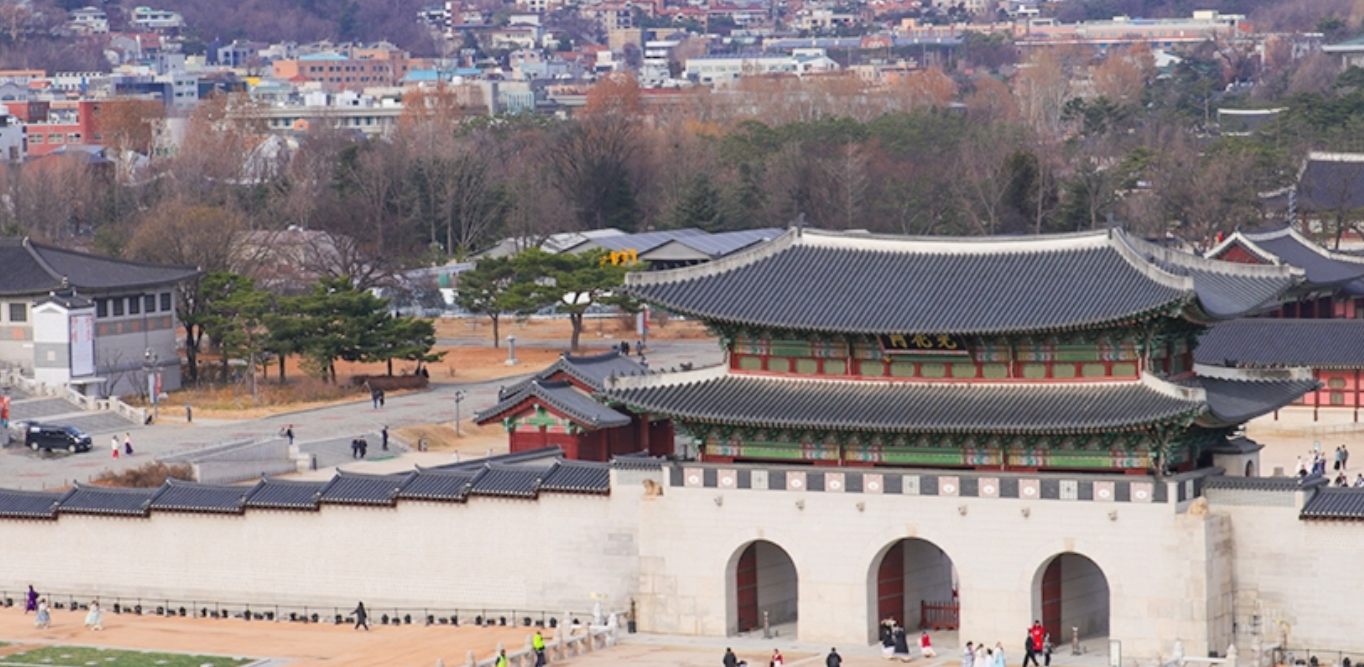
- Visiting Gyeongbokgung Palace → National Folk Museum (it’s right there, and it’s free)
- Want to understand modern Seoul → Seoul Museum of History
- Interested in the Korean War or modern history → War Memorial of Korea
- Contemporary art → MMCA Seoul or Seoul Museum of Art (SeMA)
- Traditional + contemporary art, world-class quality → Leeum Museum of Art
- Something quiet, design-focused, and genuinely beautiful → Korea Furniture Museum
- Travelling with kids, or just want something fun → Trick Eye Museum
National Museum of Korea (국립중앙박물관)
The one everyone should visit at least once.
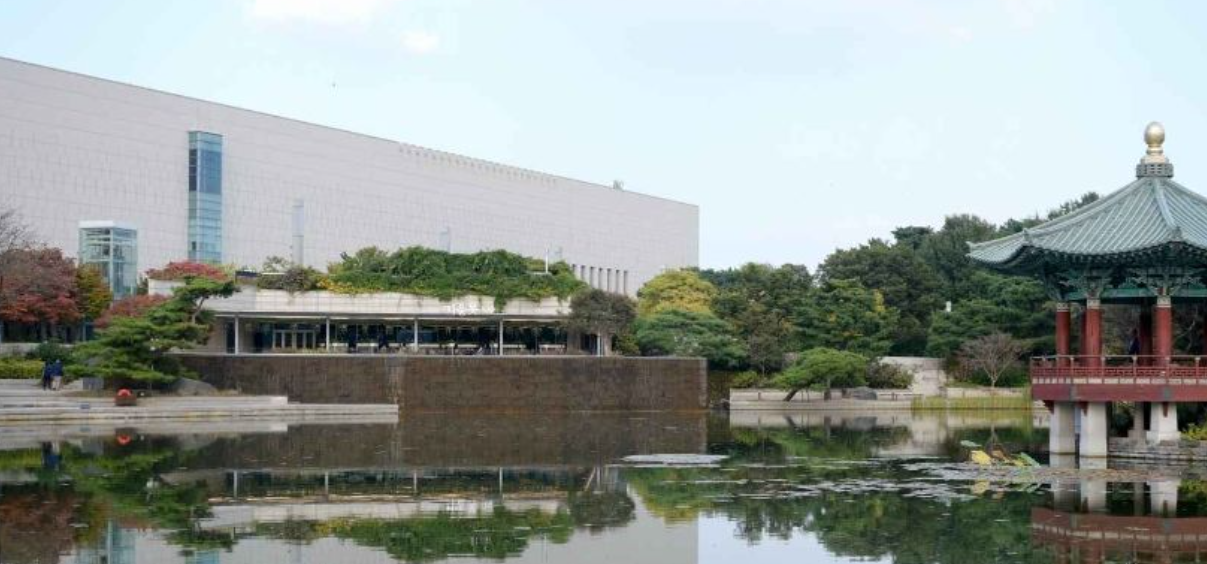
If you’re in Seoul for the first time and care at all about Korean history, this is where you start. The building alone is enormous — one of the largest museums in the world by floor area — but it never feels overwhelming because the collection is exceptionally well organised. You move through Korean civilisation from the Paleolithic Age to the early 20th century in a logical progression: prehistoric tools, Silla gold crowns, Goryeo celadon, Joseon paintings, and Buddhist sculpture, all with solid English labelling throughout.
Don’t miss:
The Room of Quiet Contemplation is one of the most arresting spaces I’ve encountered in any museum anywhere. Two 6th–7th century gilt-bronze Pensive Bodhisattva figures — both National Treasures — are displayed alone in a dim, cedar-scented chamber with a ceiling mapped with stars. It was designed for contemplation and it works. People routinely sit there for twenty minutes.
The Ten-Story Stone Pagoda from Gyeongcheonsa Temple stands 13.5 metres tall and is displayed indoors to protect it from pollution. It was removed to Japan in 1907 and returned in 1918, and the story of its theft and repatriation is as interesting as the object itself. Look at the lower floors closely — the carved scenes show clear Mongolian and Tibetan influence, reflecting the cosmopolitan patronage of the Goryeo dynasty.
The Baekje Incense Burner and a gold crown from the Silla Kingdom are the flagship artefacts from the archaeology galleries on the ground floor. If you’ve ever wondered what Korean civilisation looked like before the Joseon dynasty dominated the popular image, these rooms are the answer.
Practical details:
- Address: 137 Seobinggo-ro, Yongsan-gu — Ichon Station, Line 4 or 9, Exit 2
- Hours: Mon–Tue, Thu–Fri, Sun 09:30–17:30; Wed & Sat 09:30–21:00
- Admission: Free (permanent collection). Special exhibitions charged separately.
- Closed: January 1, Seollal, Chuseok, and the first Monday of April and November
- Free English guided tours daily at 10:30 and 13:00. Free audio guide app on the museum’s Wi-Fi.
- Allow 2.5–3.5 hours minimum. Wednesday and Saturday evenings are noticeably quieter.
National Folk Museum of Korea (국립민속박물관)
The one to pair with Gyeongbokgung Palace.
This museum sits inside the grounds of Gyeongbokgung Palace in Jongno, which means you can visit both on the same morning without any extra transit. Where the National Museum covers the grand political and artistic artefacts of Korean history, the Folk Museum covers how ordinary Korean people actually lived — what they ate, how they cooked it, what rituals marked the key moments of life, how the agricultural calendar shaped the year.
Three permanent halls are organised around daily life (food, clothing, shelter), the Korean annual calendar (seasonal customs and festivals), and life milestones from birth to death under the Confucian order. It sounds dry on paper. The execution is genuinely engaging.
Don’t miss:
The open-air village exhibition outside the main halls is the highlight for most visitors. It’s a reconstructed traditional Korean street — with a full funeral bier in vivid painted wood, Jeju Island basalt guardian statues, totem poles, a grinding mill, and most entertainingly, a replica 1970s–80s neighbourhood street complete with a barber’s shop and a pojangmacha tent bar. Children love it and it photographs extremely well.
Hall 1 (Daily Life) covers the culture of kimchi fermentation in handmade onggi ceramic jars, the evolution of hanbok by social class (the difference between a farmer’s and an aristocrat’s everyday dress is dramatic), and the mechanics of ondol underfloor heating — the system that has shaped Korean interior design for centuries and that modern Korean apartments still use in electric form.
Hall 3 (A Korean’s Lifetime) shows the objects that marked key life events: birth rituals, coming-of-age ceremonies, wedding arrangements under the Confucian matchmaking system, and the elaborate funerary customs of the Joseon aristocracy. If you’ve watched any Korean historical drama, this hall will provide context for what you saw.
Practical details:
- Address: 37 Samcheong-ro, Jongno-gu — Gyeongbokgung Station, Line 3, Exit 5
- Hours: Mar–May, Sep–Oct: 09:00–18:00; Jun–Aug: 09:00–18:30; Nov–Feb: 09:00–17:00. Extended to 21:00 on the last Wed, Fri, and Sat of each month.
- Admission: Free
- Closed: Tuesdays, New Year’s Day, Seollal and Chuseok (day after)
- Free English guided tours at 10:30 and 14:30 in front of Hall 1.
Seoul Museum of History (서울역사박물관)
The one that makes the rest of the city make sense.
I always recommend this to first-time visitors as a stop in the first day or two — ideally before you start making sense of the neighbourhoods. The museum is dedicated entirely to Seoul as a city: its founding as the capital of the Joseon dynasty in 1392, its transformation under Japanese colonial rule, its near-total destruction in the Korean War, and its subsequent reconstruction into one of the most densely populated urban environments on earth.
Don’t miss:
The 1:1,500 scale model of contemporary Seoul covers the entire ground floor of the entrance atrium. You can walk around it and point spotlights at any district. It’s the single most useful way to understand the physical logic of Seoul — where the mountains sit, how the Han River bisects the city, why Gangnam is where it is, and what the relationship between the old Joseon city (north of the river) and the modern expansion (south) looks like from above.
Zones 1 and 2 reconstruct Joseon-era Seoul using detailed maps, architectural models, and artefacts — the layout of the royal palace complex, the social geography of the aristocratic Bukchon district versus the commoner settlements, and the meticulous urban planning the dynasty applied to its capital.
Zone 4 covers the 20th century and the museum doesn’t flinch from the painful parts. Replica apartment interiors document how Seoul’s population went from a war-ravaged city of rubble in the early 1950s to a megacity of ten million by the 1980s. A restored 1930s tram car sits in the outdoor garden, and a section of the original Gwanghwamun Gate is preserved outside the building’s entrance.
Practical details:
- Address: 55 Saemunan-ro, Jongno-gu — Gwanghwamun Station, Line 5, Exit 7
- Hours: Tue–Sun 09:00–18:00; Friday extended to 21:00
- Admission: Free
- Closed: Mondays, January 1
- Free audio guides in English, Japanese, and Chinese at the information desk. Free English guided tours Tue–Fri at 11:00 and Saturday at 14:00.
- The adjacent Gyeonghuigung Palace is also free with this visit.
War Memorial of Korea (전쟁기념관)
The one that changes how you see the country.
I wasn’t sure how to feel about visiting this as a teenager. By the time I left I understood that no building in Seoul carries more weight for understanding what South Korea is and why it exists as it does. The Korean War is not distant history here — the armistice was signed in 1953 and there has been no peace treaty. Every Korean man serves in the military. The country that built the museums, restaurants, and streets you’re exploring was, within living memory, rubble.
The memorial covers Korean military history from ancient battles against Mongol invasions through to the present day, but the Korean War is the heart of it. The exhibitions are thorough and emotionally honest without being propagandistic.
Don’t miss:
The Statue of Brothers in the outdoor plaza is the most powerful single object at the site. A South Korean soldier and a North Korean soldier — depicted as brothers who have met on the battlefield — embrace each other on a cracked dome representing the divided peninsula. It’s been photographed thousands of times. Standing in front of it, in person, is still affecting.
The Korean War Room is a multi-room exhibition covering the entire arc of the war: the surprise North Korean crossing of the 38th parallel on June 25, 1950; the near-total fall of the South in the first weeks; MacArthur’s Incheon landing that reversed the tide; the Chinese military intervention; and the eventual armistice that left Korea where it started, geographically, at the cost of approximately 2.5 million lives. Personal letters, uniforms, photographs, and period newsreel footage are combined with dioramas and tactical maps.
The outdoor weapons park has over 70 aircraft, tanks, armoured vehicles, and naval vessels. A Boeing B-52D Stratofortress — one of only three displayed outside the United States — is here. The replica of the PKM patrol boat sunk in the 2002 Second Yeonpyeong Naval Battle can be entered. For anyone interested in military hardware, or for families with children who need space to move, this outdoor area is a major draw.
Practical details:
- Address: 29 Itaewon-ro, Yongsan-gu — Samgakji Station, Line 4 or 6, Exit 12 (Line 6) or Exit 1 (Line 4)
- Hours: Tue–Sun 09:30–18:00 (last entry 17:00)
- Admission: Free
- Closed: Mondays
- Allow at least 2–3 hours; arrive before 15:00. Free guided tours from veteran guides available. English placards throughout all indoor halls.
MMCA Seoul — National Museum of Modern and Contemporary Art (국립현대미술관 서울관)
The one for contemporary art and architecture.
The MMCA Seoul branch opened in 2013 on the former site of the Defence Security Command, directly behind Gyeongbokgung Palace in the Jongno district — an address with an obvious historical charge. The building by architect Min Hyun-jun incorporates the courtyard concept of traditional Korean architecture (the madang — the communal gathering space around which a home is arranged) into its interior design, and a restored Joseon-era royal genealogy office sits in the rear garden.
The collection spans roughly 11,800 works, with a focus on Korean contemporary art from the 1960s to the present. Video art pioneer Paik Nam June is well represented. A major 2021 donation from the Lee Kun-hee estate added over 1,400 significant works.
The Seoul branch rotates exhibitions rapidly — which means the specific shows when you visit will differ from what’s described here — but the building, the courtyard, and the bookshop are consistent draws. The MMCA Deoksugung branch (Line 1 or 2, City Hall Station, inside Deoksugung Palace) is a smaller companion space focused on Korean modern art from the late 19th century through the 1960s — excellent if you’re in the City Hall area and interested specifically in how Korean artists navigated the Japanese colonial period.
Practical details:
- Address: 30 Samcheong-ro, Jongno-gu — Anguk Station, Line 3, Exit 1 (10-minute walk)
- Hours: Mon, Tue, Thu, Fri, Sun 10:00–18:00; Wed & Sat 10:00–21:00
- Admission: ₩7,000 all-access pass. Annual free admission event every September (10 days).
- On-site café and bookshop. Free shuttle connects MMCA Seoul and MMCA Gwacheon (4 times daily) for a combined day trip.
Leeum Museum of Art (리움미술관)
The one for art connoisseurs.
Leeum is the most prestigious private art museum in Korea and one of the strongest in Asia. The complex in Hannam-dong houses two permanent collections in two separate buildings — both designed by internationally recognised architects — connected by a shared lobby.
M1 (designed by Mario Botta) holds the traditional collection: approximately 160 works spanning from the Three Kingdoms period to the Joseon dynasty. Celadon ceramics, Joseon white porcelain, Buddhist sculpture in bronze and stone, folding screens, and calligraphy by masters including Kim Hong-do. Thirty-six National Treasures are in this collection. Visitors descend through floors arranged by medium and period — starting with ceramics at the top and ending with metalwork at the bottom — in a spiral that feels intentional and well-considered.
M2 (designed by Jean Nouvel) holds the contemporary collection: Korean artists including Park Soo-keun and Lee Jung-seob alongside international names including Mark Rothko, Andy Warhol, Damien Hirst, Donald Judd, and Yves Klein. The rusted steel Corten exterior filters natural light through large windows, and the building is worth visiting for the architecture alone.
The outdoor courtyard has a rotating major sculpture commission — currently Anish Kapoor’s Tall Tree and the Eye.
Practical details:
- Address: 60-16 Itaewon-ro 55-gil, Yongsan-gu (Hannam-dong) — Hangangjin Station, Line 6, Exit 1 (5-minute walk)
- Hours: Tue–Sun 10:30–18:00. Closed Mondays.
- Admission: M1 only: Free. M1 + M2: ₩12,000. M1 + M3 (special exhibitions): ₩16,000. All-access: ₩20,000
- Advance reservation recommended (up to 14 days ahead, max 4 people): leeum.org. Some walk-in tickets available.
- Free English audio guide (device loan — passport as deposit). Free English tours on weekend afternoons.
- Photography prohibited inside galleries. One of the quieter major museums — weekday mornings are particularly calm.
Seoul Museum of Art / SeMA (서울시립미술관)
The one for contemporary Korean art in a historic setting.
SeMA’s main branch in Seosomun occupies a building that retains the stone facade of the former colonial-era Supreme Court building (1920s) while the interior is entirely modern. It sits on Deoksugung-gil — the stone-wall road that runs alongside Deoksugung Palace — in the Jeong-dong historic district, which makes it an easy add-on to a palace or City Hall area visit.
The focus here is on living Korean artists, particularly emerging and mid-career figures. Shows rotate frequently and tend to be less branded than the MMCA — this is a good place to discover Korean contemporary art that hasn’t yet reached international recognition. General entry is free; special exhibitions typically charge ₩1,000–₩3,000, which makes it an easy drop-in.
Practical details:
- Address: 61 Deoksugung-gil, Jung-gu — City Hall Station, Line 1 or 2, Exit 1 (5-minute walk)
- Hours: Tue–Fri 10:00–20:00; Weekends (Mar–Oct) 10:00–19:00, (Nov–Feb) 10:00–18:00; Last Wednesday of the month extended to 22:00
- Admission: Free general entry. Special exhibitions ₩1,000–₩3,000.
- Closed: Mondays (open if Monday is a public holiday), New Year’s Day
- The Deoksugung Palace stone-wall road (Deoksugung Doldam-gil) begins right outside — one of Seoul’s most pleasant short walks in any season.
Korea Furniture Museum (한국가구박물관)
The most beautiful museum in Seoul — if you book ahead.
This one takes effort. It requires an advance reservation, the location in Seongbuk-dong is best reached by taxi, and it costs ₩20,000. It is also, by a wide margin, the most distinctive museum experience in the city.
The collection focuses on traditional Korean wooden furniture from the late Joseon dynasty — approximately 2,500 pieces including chests, cabinets, scroll-book stands, dinner tables, lacquerware inlaid with mother-of-pearl, and folding screens used at birth, wedding, and funeral ceremonies. What makes Leeum different from a conventional display is how the furniture is shown: installed inside ten original hanok houses that were physically relocated to the museum grounds and restored. You move through the buildings as living spaces — men’s quarters, women’s quarters, kitchen, study — with furniture placed as it would have functioned. The building materials include elements salvaged from Changgyeong Palace.
The mountain setting is part of it. Stone-walled pathways connect the hanok structures through a garden with views of Bukhansan Mountain. CNN called it the most beautiful museum in Seoul. I wouldn’t argue with that.
Reserve well in advance. Monthly reservations open on the 15th of the preceding month via kofum.com — they fill up quickly. English-language tours run at 14:00 and 16:00 Tuesday through Saturday.
Practical details:
- Address: 330-577 Seongbuk-dong, Seongbuk-gu — Hansung University Station, Line 4, Exit 6, then taxi (strongly recommended over the infrequent bus)
- Hours: Tue–Sat only. Tours at 14:00 and 16:00 (English); 11:00 and 15:00 (Korean)
- Admission: ₩20,000 (guided tour included). Advance reservation essential (minimum 3 days ahead).
- Photography prohibited inside hanok buildings (photo zones outside only). Not suitable for children under 7.
Trick Eye Museum (트릭아이 뮤지엄)
The one for fun, photos, and families.
Not every visit needs to be a history lesson. The Trick Eye Museum in Hongdae is exactly what it sounds like: a series of large-scale trompe-l’oeil wall paintings and three-dimensional illusions designed so visitors become part of the image. The smartphone AR app animates many of the works — you photograph a static painting and it moves. The attached Ice Museum runs at a permanent −5°C with ice sculptures, an ice slide, and an ice bar; warm jackets and gloves are provided at the entrance.
It’s popular for good reason. The concept is well-executed, the variety across zones (classical masterpiece parodies, fantasy landscapes, adventure scenarios) keeps children and adults engaged, and the Hongdae neighbourhood around it makes the whole day easy — there’s street food, cafés, and evening entertainment within a few minutes’ walk.
Practical details:
- Address: 20 Hongik-ro 3-gil, Mapo-gu (inside Coconut Box complex, Hongdae) — Hongik University Station, Line 2, Exit 9 (8-minute walk)
- Hours: Daily 09:00–22:00 (last admission 21:00)
- Admission: Adults ₩15,000; Students (13–18) ₩12,000; Children (under 12) ₩10,000. Combo with Ice Museum: ₩18,000. Book online via Trazy or Klook for a 10–20% discount.
- Re-entry is not permitted. Weekday mornings are significantly quieter than weekends.
Practical Notes
Which museums are free: National Museum of Korea (permanent galleries), National Folk Museum, Seoul Museum of History, War Memorial of Korea, Seoul Museum of Art (general entry), and Leeum M1 (traditional collection only) — all free with no booking required.
Quietest times: Weekday mornings from 10:00 to noon. Wednesday and Saturday evenings at museums with late opening. Friday evenings at Seoul Museum of History (open until 21:00).
Busiest times: Weekend afternoons from noon to 16:00. Cherry blossom season (late March to mid-April) at all Jongno-area museums. School holiday periods in late July–August and late December.
Audio guides: Free at the National Museum of Korea (app on museum Wi-Fi), Seoul Museum of History (device at desk), Leeum (device loan, passport deposit), and War Memorial. The MMCA uses a paid in-app system.
Combining visits: The most natural same-day pairings are: Gyeongbokgung Palace + National Folk Museum (both in Jongno); Seoul Museum of History + SeMA + Deoksugung Palace (all in the Gwanghwamun–City Hall corridor); and the Seongsu-dong circuit — Amore Seongsu, Olive Young N Seongsu, and day trip to Korea Furniture Museum if you’ve planned ahead.